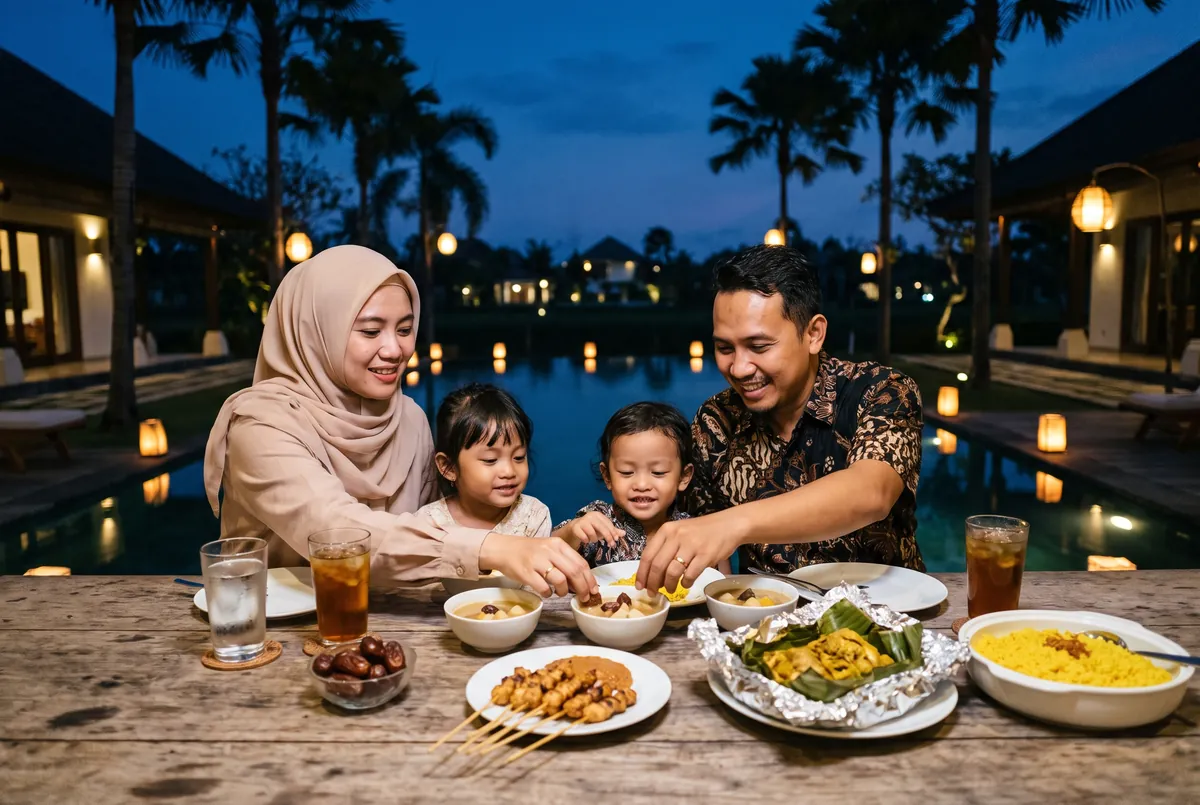
Guests from Malaysia, Singapore, the Gulf and Jakarta often ask us the same careful question before booking: "Can you really cook halal?" It is the right question in Bali. Most of the island is Hindu, babi guling — spit-roast pork — is its most famous dish, and plenty of villa kitchens cooked pork the week before you arrived. Good halal food here is absolutely possible — Bali has a sizeable Muslim community and certified suppliers — but it depends on process, not good intentions.
What "Halal" Means When We Cook at Your Villa
- Certified meat and poultry. Chicken, beef, lamb and duck come from suppliers carrying Indonesia's national halal label — the purple "Halal Indonesia" mark issued by BPJPH. Receipts and packaging are available on request.
- No pork, no lard, no pork stock — not in the main course, not in the sambal, not in a dumpling filling.
- No alcohol in the cooking. No wine in sauces, no arak, no rum in desserts, no mirin; vanilla pods or powder instead of alcohol-based extract.
- Our own equipment. For halal bookings the chef brings knives, boards and pans, so nothing touches cookware that has been used for pork.
- Checked labels on sauces, stock powders, gelatine and cheese — the places non-halal ingredients hide.
One honest note: we are a private chef service, not a certified restaurant kitchen, so we do not hold a halal certificate as a business. What we commit to is the process above, and we will answer any question about any ingredient. If your family or group requires a certified kitchen, tell us, and we will be straightforward about what fits.
Halal Menus From Bali and Beyond
Balinese cooking is full of dishes that are naturally halal when made with the right meat — and a few that simply need a halal version:
- Ayam betutu — chicken rubbed with bumbu and slow-cooked in banana leaf, the island's great celebration dish.
- Sate lilit — minced fish or chicken with coconut and spices, wrapped around lemongrass.
- Jimbaran-style ikan bakar — whole grilled fish with sambal matah, bought at the Kedonganan fish market at dawn.
- Bebek betutu or crispy duck — an Ubud favourite.
- Lawar — the traditional version often contains pork and blood; ours is chicken or vegetables only.
From the rest of Indonesia: beef rendang, soto ayam, Madura-style chicken satay and nasi goreng kampung. Further afield: Middle Eastern mezze and grilled lamb, Malaysian-style curries, or a halal BBQ night with chicken, beef and seafood — tell us it is a halal booking and we plan the grill set-up accordingly. For more ideas, see our villa dinner menu ideas.
Questions to Ask Any Private Chef About Halal
Whether you book us or someone else, these five questions tell you quickly whether a chef really cooks halal:
- Where does the meat come from, and can I see the halal label or receipt?
- Will pork be cooked in the same kitchen, or with the same pans, on the day?
- Which oil and stock do you use, and are the sauces free of alcohol?
- Do you bring your own knives, boards and cookware?
- How do you handle desserts — gelatine, vanilla extract, rum?
Clear, specific answers are a good sign. Vague ones are not.
Prayer Times and Service
At a private villa, dinner runs on your schedule, not a restaurant's second seating. We time the courses around prayer: starters early, a pause at maghrib, mains afterwards. For big family dinners we set the table so elders are served first and food for the children is ready early, and the kitchen stays quiet while the family prays.
Ramadan at a Villa: Iftar and Sahur
Ramadan 1448 is expected to begin in early February 2027, and Idul Fitri is on 10–11 March 2027. A villa iftar is one of the loveliest ways to spend a Ramadan evening in Bali:
- Break the fast at maghrib with dates, water, iced sweet tea and kolak — banana and sweet potato in coconut milk and palm sugar.
- Pause for prayer while the chef finishes the mains.
- Dinner — soup first, then rendang or ayam betutu, rice, vegetables and dessert.
For sahur, the pre-dawn meal, we cook the evening before and leave labelled dishes ready to reheat in minutes — rice, a protein, vegetables, fruit and dates — because our chefs work from 07:00 to 22:00. For a whole stay, this is exactly how our weekly meal prep works. Note that in 2027 Nyepi, the Balinese Day of Silence, falls on 8 March, in the last days of Ramadan — our Nyepi food guide explains how to plan that week.
Prices
Halal menus cost the same as our standard menus: private dinners from IDR 900,000 per person for four or more guests, the romantic dinner for two at IDR 3,000,000, BBQ from IDR 700,000 per person and meal prep from IDR 1,800,000 per person per week — groceries, cooking, service and clean-up included. Full rates are on the pricing page; for an instant estimate, use the calculator and write "halal" in the notes.
Where We Cook Halal Menus
All over south Bali: family villas in Nusa Dua and Jimbaran, groups in Seminyak and Canggu, and private pools in Uluwatu and Ubud. Send your dates and villa area on WhatsApp and we will reply with halal menu options the same day.